The Stiefel Theatre for the Performing Arts has added two shows to their upcoming line up.
Singer/songwriter Lucinda Williams will perform at 8 p.m. Saturday August 20th and country music hall of famer and legend Loretta Lynn returns to the Stiefel stage at 8 p.m. Saturday, July 9th. Tickets for both shows are on sale now.
—
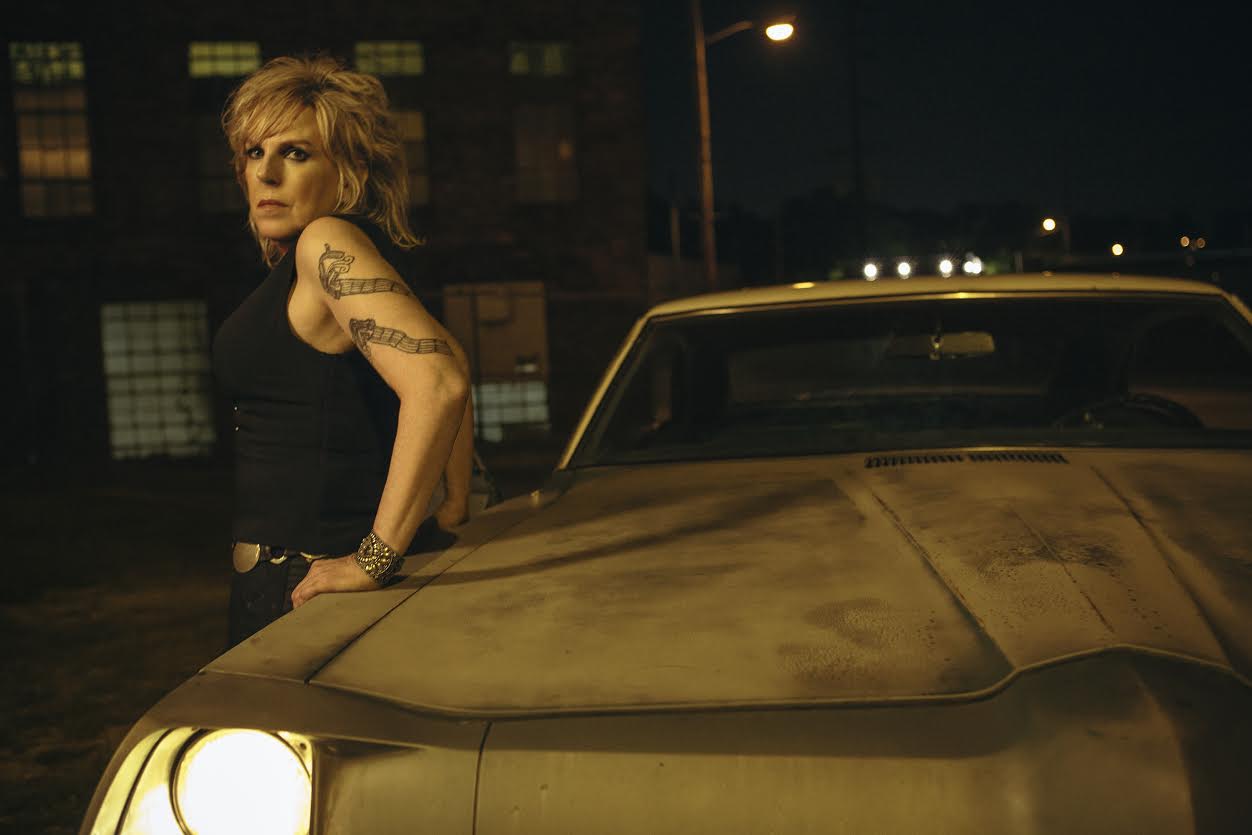
On February 5th, Lucinda Williams released her 12th studio album, The Ghosts of Highway 20. The Ghosts of Highway 20 weaves a spellbinding 14-track narrative that’s centered on the 1,500-mile stretch of highway (Interstate 20) that runs in part from Georgia to Texas, and finds the singer-songwriter experimenting with unique arrangements, aided by guitarists Bill Frisell and Greg Leisz. In “Louisiana Story,” Williams evokes iconic Southern imagery, taking inspiration from the poems of her legendary father, poet Miller Williams, who died on New Year’s Day 2015, and reinterpreting Bruce Springsteen’s brooding “Factory.” She also puts her own musical stamp on “House of Earth,” which features a set of lost Woody Guthrie lyrics.
Lucinda Williams The Ghosts of Highway 20 We’ve all heard about the iconic vibe of Route 66, the neon lights on Broadway and the ocean air of the Pacific Coast Highway. But there are untold stories emanating from countless blue highways across the land – like Interstate 20, which cuts a 1500-mile swath from South Carolina to Texas, and cuts deep into the spirit of those who’ve spent their lives traversing it.
Lucinda Williams is one of those people, and with the expansive, enveloping The Ghosts of Highway 20, she brings those stories to life – and gives listeners a remarkably vivid look at how the highway has been a literal and figurative backdrop throughout her entire life. The intensely involving 14-song collection may be the most deeply felt, deeply affecting work of Lucinda Williams’ illustrious 35-plus-year career, a career that has been established on a foundation of remarkably personal songs.
“It is literally a map of my life in a lot of ways,” says Lucinda. “We were driving between shows and between cities, and I kept seeing things that brought me back to times and places in my past. Like when we played in Macon, Georgia, a place I lived when I was five or six years old, I got out of the bus and I was transported back to when I saw this street singer, Blind Pearly Brown. It was like nothing had changed. All these things started percolating in my brain, and the songs just came.”
The thread of Highway 20 connects those songs, mirroring the winding route of the road itself, a street that cleaves close to Williams’ childhood homes, the final resting place of her mother, the sites where signposts of her formative years are forever planted. The connection runs deep here, particularly on the dark and moody tones of the album’s poignant title track, on which Lucinda ponders the lives that were lived, the legacies that were left and the imprints that remain on her own soul, conveying those vignettes with a palette that’s nuanced enough to give the listener pause to ponder, but unvarnished enough that her message is impossible to miss.
She cuts closest to the bone with “Dust” (a song built around a poem written by her late father, poet laureate Miller Williams, whose “Compassion” she interpreted on 2014’s Down Where the Spirit Meets the Bone) and “Bitter Memory,” a bracing consideration of times gone by, one that doesn’t sugarcoat things with the usual veneer of nostalgia. Lucinda continues down that path with “Louisiana Story,” a sequel of sorts to her classic
“Baton Rouge” that captures its faded Delta setting with a wizened beauty. “I didn’t want to repeat myself, but I kept coming back to the story I was telling there,” she explains. “I wanted to describe, like a photograph of what I recall back then – the humming of the fans, the tar sticking to the bottom of my feet when I went out to play and other vivid recollections that I’ve never forgotten from that time.”
The sense memory is strong here, in Lucinda’s storytelling, and in the interplay between the musicians, notably guitarist Bill Frisell (who last joined her on Down Where the Spirit Meets the Bone). His intuitive, incisive playing – especially in tandem with fellow guitarist Greg Leisz, adds sunshine and shadow, darkness and light, sometimes within the same passage. That pair underscores the heretofore unheard tenderness that Lucinda brings to the lullaby-gentle “Place in My Heart” and a palpable layer of grit to a surprising version of Bruce Springsteen’s “Factory” (a darkly pensive Darkness on the Edge of Town tale about “Men [who] walk through these gates with death in their eyes,” an image that fits seamlessly into the album’s hyper-real depictions of life).
“I know people throw the word around a lot, but this is one of the most organic things I’ve ever worked on,” says Greg Leisz, who co-produced and played guitar on the album. “There aren’t any overdubs, there’s no sweetening, it was the musicians getting into a headspace and bringing the songs to life. We were ecstatic to see how the whole thing came together, how [Lucinda] reacted to seeing the process unfold. It was a oneof-a-kind experience.”
Lucinda Williams has been maneuvering down a path all her own for more than three decades now, emerging from Lake Charles, Louisiana, where her iconoclastic upbringing helped her forge the stunning Lucinda Williams (aka, the Rough Trade album). Somehow, that milestone 1988 set eventually disappeared from shelves, but was reissued 25 years later, as a deluxe edition that garnered unanimous acclaim — including Jim Farber of New York’s Daily News hailing it by calling it “A perfect work. There’s not a chord, lyric, beat or inflection that doesn’t pull at the heart or make it soar.”
For much of the ‘90s, Lucinda moved around the country, turning out work that won immense respect inside the industry – as borne out by the Grammy afforded MaryChapin Carpenter’s interpretation of Williams’ “Passionate Kisses.” While her recorded output was sparse for a time, the work that did was invariably hailed for its indelible impressionism – like 1998’s Car Wheels on a Gravel Road, which notched her a second Grammy Award. Over the next decade, she crafted such classic sets as West (2007), and Blessed (2011), which the Los Angeles Times dubbed “a dynamic, human, album, one that’s easy to fall in love with.”
Lucinda credits the injection of vitality and passion that emerged in part to Tom Overby, her partner in both life and music, who’s acted as both a sounding board and collaborator, contributing production ideas and offering encouragement to forge forward in directions that she might not have otherwise explored. That creative connection has grown increasingly electric over the years, as borne out by 2014’s Down Where the Spirit Meets the Bone, which Blurt’s Fred Mills referred to as “A snapshot—or featurelength film, take your pick – of a woman fully renewed and at the height of her creative powers.” The album won the 2015 Americana Music Association Award for Album of the Year.
The Ghosts of Highway 20, which has its roots in the sessions that produced that last outing, takes things even further. Williams stretches fearlessly here, experimenting with jazzy vocal phrasing that’s reminiscent of Van Morrison’s more adventurous offerings, and giving full voice to her literary side – which has its roots in childhood encounters with Flannery O’Connor (who her late father called his “greatest teacher”). The most dramatic example of that freewheeling spirit arrives at the close of the album – in the form of the 13-minute “Faith and Grace,” a churning groove powered by the drumming of Jamaican legend Carlton “Santa” Davis (best known for his work with the late Peter Tosh) and Jamaican hand drummer Ras Michael, whose haunting vocals add to the track’s intensity.
“That song does sum up what the album is all about for me,” says Williams. “It isn’t a jam, it’s a groove, and I just got into the room with those guys and went off. I had no idea what I was going to do, but I went with it, we all went with it, and it felt so spiritual, so real. It surpasses anything I’ve ever done, I think – and it makes me really excited about where I could take things in the future.”
—

“To make it in this business, you either have to be first, great or different,” says living legend Loretta Lynn. “And I was the first to ever go into Nashville, singin’ it like the women lived it.”
Loretta first arrived in Nashville 55 years ago, signing her first recording contract on February 1, 1960, and within a matter of weeks, she was at her first recording session. A self-taught guitarist and songwriter, Lynn became one of the most distinctive performers in Nashville in the 1960s and 1970s, shaking things up by writing her own songs, many of which tackled boundary-pushing topics drawn from her own life experiences as a wife and mother.
In addition to being “first,” she was also “great” and “different.” Loretta Lynn’s instantly recognizable delivery is one of the greatest voices in music history. As for “different,” no songwriter has a more distinctive body of work. In lyrics such as “Don’t Come Home A- Drinkin’” and “Your Squaw Is on the War Path” she refused to be any man’s doormat. She challenged female rivals in “You Ain’t Woman Enough” and “Fist City.” She showed tremendous blue-collar pride in “Coal Miner’s Daughter” and “You’re Lookin’ at Country.” She is unafraid of controversy, whether the topic is sex (“Wings Upon Your Horns”), divorce (“Rated X”), alcohol (“Wouldn’t It Be Great”) or war (“Dear Uncle Sam”). “The Pill,” her celebration of sexual liberation, was banned by many radio stations. Like the lady herself, Loretta Lynn’s songs shoot from the hip.
As millions who read her 1976 autobiography or saw its Oscar winning 1980 film treatment are aware, Loretta is a Coal Miner’s Daughter who was raised in dire poverty in a remote Appalachian Kentucky hamlet. Living in a mountain cabin with seven brothers and sisters, she was surrounded by music as a child.
“I thought everybody sang, because everybody up there in Butcher Holler did,” she recalls. “Everybody in my family sang. So I really didn’t understand until I left Butcher Holler that there were some people who couldn’t. And it was kind of a shock.” She famously married Oliver “Doolittle” Lynn when she was a barely schooled child of 13. “Doo” was a 21-year-old war veteran with a reputation as a hell raiser. When she was seven months pregnant with her first child, they moved far away from Appalachia to Custer, Washington. By age 18, she had four children (two more, twins, came along in 1964). Isolated from her native culture and burdened with domestic work, she turned to music for solace.
“Before I was singing, I cleaned house; I took in laundry; I picked berries. I worked seven days a week. I was a housewife and mother for 15 years before I was an entertainer. And it wasn’t like being a housewife today. It was doing hand laundry on a board and cooking on an old coal stove. I grew a garden and canned what I grew. That’s what’s real. I know how to survive.”
Doo heard her singing at her chores and declared that she sounded just as good as anyone he heard on the radio. He bought her a guitar and told her to learn how to play it and write songs with it. Loretta says her songs were so forthright because she didn’t know any better.
“After he got me the guitar, I went out and bought a Country Song Roundup. I looked at the songs in there and thought, ‘Well, this ain’t nothing. Anybody can do this.’ I just wrote about things that happened. I was writing about things that nobody talked about in public, and I didn’t realize that they didn’t. I was having babies and staying at home. I was writing about life. That’s why I had songs banned.”
Doo began pushing her to perform in area nightclubs. Executives from Zero Records heard her in a nightspot across the border in Vancouver, Canada. She soon recorded her debut single, “I’m a Honky Tonk Girl,” for the little label. Loretta made herself a fringed cowgirl outfit, and she and Doo drove across the country in his old Mercury sedan promoting the single at station after station.
Astonishingly, it worked. The disc hit the popularity charts in the summer of 1960 and brought the couple to Music City. She began singing regularly on the Grand Ole Opry after her debut on Oct. 15, 1960. The show’s Wilburn Brothers took her under their wings. Teddy Wilburn helped to polish Loretta’s startlingly original songwriting style. Brother Doyle Wilburn took a tape of her singing “Fool #1” to producer Owen Bradley at Decca Records. Owen liked the song, but was already working with Kitty Wells, Goldie Hill, Brenda Lee and Patsy Cline and said he didn’t need another female singer. Teddy told him that he couldn’t have the song if he didn’t sign its singer. As a result, Brenda had a smash pop hit with “Fool #1,” and Loretta got a Decca Records contract.
Like everyone else who encountered her, Owen Bradley was smitten with Loretta’s innocence, individualism, infectious wit, independent spirit, humorous candor, refreshing frankness and immense talent. In fact, he came to regard her as “the female Hank Williams.”
Loretta’s Decca chart debut came with 1962’s “Success.” It became the first of her 51 top-10 hits and led to an invitation to join the Grand Ole Opry cast later that year. Her fellow Opry cast member Patsy Cline taught her how to dress, style her hair and wear make-up. The Wilburns began featuring her on their nationally syndicated TV series. She sang a series of sassy domestic ditties with her childhood hero, Ernest Tubb. As a solo, she hit her stride with “Wine, Women and Song” (1964) and “Happy Birthday” (1965), both of them feisty, don’t-step-on-me numbers.
“She’s the spokesman for the ladies,” observed the late Owen Bradley. “Loretta had a lot of different ideas, and they were very fresh. Women’s lib was also coming on at that time. You have to be in the right place at the right time. And I think Loretta was standing right there.”
“Most of my songs were from the women’s point of view,” Loretta wrote in her best- selling autobiography. “That’s who I’m singing about and singing to during my shows. And the girls know it….Most of my fan club is women, which is how I want it.”
Among Loretta’s finest moments on disc are such empowering female statements as “You Wanna Give Me Lift” (1970), “I Wanna Be Free” (1971), “We’ve Come a Long Way Baby” (1978), “Hey Loretta” (1973), “Love Is the Foundation” (1973) and the hilarious “One’s on the Way” (1972). She memorably romanced and sassed Conway Twitty in a number of hugely popular duet performances in 1970-1982.
In 1967, she began picking up various Female Vocalist of the Year trophies. She and Conway also won a long string of Duet of the Year awards beginning in 1971, The industry showered her with BMI songwriting honors, Gold Record plaques, a Grammy Award and other accolades. In 1972, she became the first woman in history to win the Country Music Association’s Entertainer of the Year trophy.
By the mid-1970s, Loretta Lynn was an undeniable superstar. She was featured on the covers of Newsweek (1973), Redbook (1974) and many other mainstream national publications. With her kookie humor, scrambled grammar and unpretentious manner, she became a TV talk-show favorite.
Loretta continued to dominate the charts as the ‘70s drew to a close, scoring major hits with 1976’s “Somebody Somewhere,” 1977’s “Out of My Head and Back in My Bed” and 1979’s “I’ve Got a Picture of Us on My Mind.” Her 1982 smash hits “I Lie” and “Making Love From Memory” carried her into the new decade.
One of the most remarkable things about Loretta Lynn is how she renews her creativity time and again. Two years after she was inducted into the Nashville Songwriters Hall of Fame in 1983, she was back on the charts with the hit, “Heart Don’t Do This to Me.” In 1988, the year she entered the Country Music Hall of Fame, Loretta recorded with k.d. lang. She earned a Gold Record in 1994 with Honky Tonk Angels, a trio CD with Dolly Parton and Tammy Wynette.
Doo died in 1996. Numb with grief, Loretta admits that she was lost in a fog for more than a year. But she came back again with a 2000 CD titled Still Country. She also returned to the concert trail.
“It’s a good thing, too,” she says. “Because if I hadn’t, I would have been nuts by now. I would have been completely nuts.”
Loretta published a second memoir, Still Woman Enough, in 2002. She was honored at The Kennedy Center in 2003, yet pushed forward again the following year by winning two Grammy Awards for Van Leer Rose, a collaboration with rocker Jack White. Also in 2004, she published a book of recipes and anecdotes titled You’re Cookin’ It Country.
Lynn is also one of the most awarded musicians of all time. She has been inducted into more music Halls of Fame than any female recording artist, including The Country Music Hall of Fame and the Songwriters Hall of Fame, and was the first woman to be named the Country Music Association’s Entertainer of the Year in 1972. Lynn received Kennedy Center Honors in 2003 and a Presidential Medal of Freedom in 2013. She has won four Grammy Awards (including a Grammy Lifetime Achievement Award in 2010) and sold more than 45 million records worldwide.
In March 2016, Legacy Recordings will release FULL CIRCLE, Loretta’s first new studio album in over ten years. Produced by Patsy Lynn Russell and John Carter Cash, and recorded at the Cash Cabin Studio in Hendersonville, Tennessee, FULL CIRCLE will take listeners on a journey through Loretta’s musical story, from the Appalachian folk songs and gospel music she learned as a child, to new interpretations of her classic hits and country standards, to songs newly-written for the project.
That same month, PBS will also broadcast the the nationwide premiere of a new documentary about Loretta’s remarkable life and career called American Masters — Loretta Lynn: Still a Mountain Girl. The film will explore the country legend’s hard- fought road to stardom. From her Appalachian roots to the Oscar-winning biopic of her life, “Coal Miner’s Daughter,” Lynn struggled to balance family and her music career and is still going strong over 50 years later.
Loretta Lynn’s life is still a work in progress. She’s still out there on the road, still writing songs and still recording them as only she can. “I ain’t a star – a star is something up in the night sky,” says Loretta Lynn. “People say to me, ‘You’re a legend.’ I’m not a legend. I’m just a woman.
—
Tickets for these shows can be purchased at the Stiefel Theatre ticket office, 151 S. Santa Fe, by phone at 785-827-1998, or online at ticketmaster.com, which can also be accessed through the Stiefel website at www.stiefeltheatre.org.
