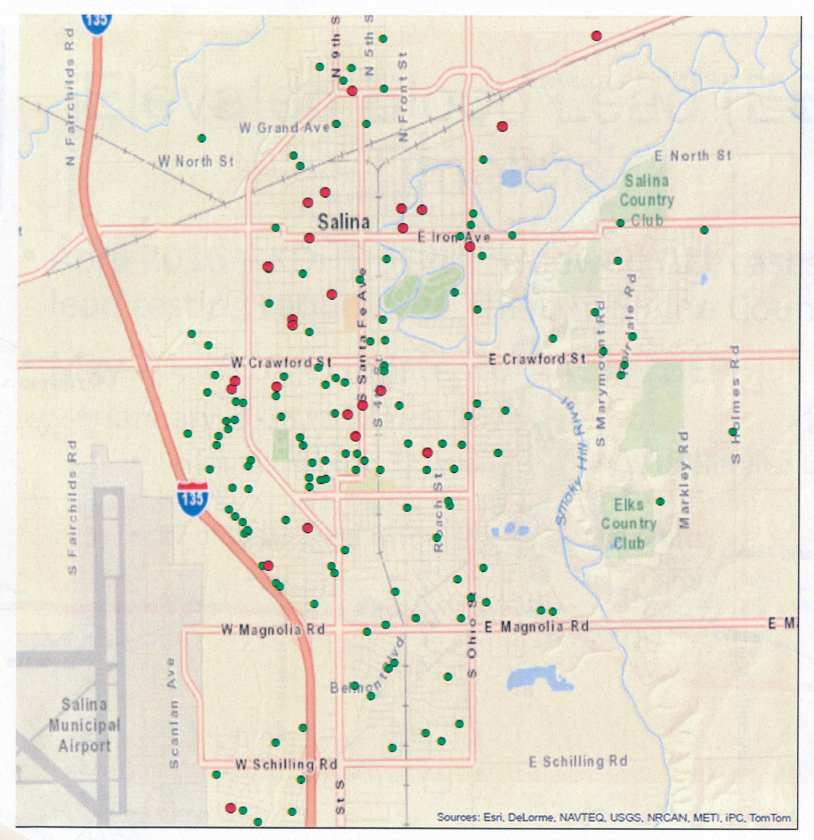
At their regular meeting on Tuesday, Saline County Commission Chairman Monte Shadwick asked, “where is the lead coming from?”
Saline County Health Department Director Jason Tiller replied, “we don’t know right now.” Tiller then told commissioners that every possible source of lead contamination is being examined.
Lead has become a top concern for county officials after 32 Saline County children were found to have had high lead levels over the past year.
Tiller said that on June 22nd and June 23rd, a total of 384 adults and children were tested for lead. Of those, 42 individuals did not identify any risk factors to proceed with further blood screenings. Blood screenings were also completed during that time that involved 147 children and 153 adults. An additional 42 individuals will be called back to complete the blood screening. Results will come from the Kansas Department of Health and Environment in about 10 to 14 business days.
In March of this year, the Pediatric Environmental Health Specialty Unit at Children’s Mercy Hospital in Kansas City contacted KDHE officials about elevated blood lead levels that were found in Saline County children. Typically, local health departments are notified when elevated blood lead levels indicate 10 micrograms of lead or higher per deciliter of blood (10 ug/dL).
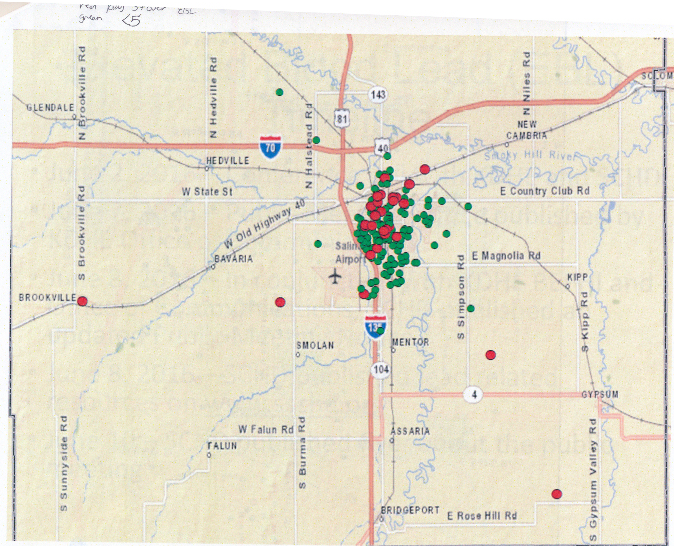
On May 20th, KDHE’s Bureau of Epidemiology and Public Health Informatics provided an update. During a 15 month period (January 1, 2015 to March 31, 2016), 32 Saline County residents were found to have elevated blood lead levels. Of these, 27 lived with the Salina City limits.
Tiller said Kansas recommends that all children be screened for blood lead levels at age 12 and 24 months. As part of Kan Be Healthy Screenings, children on Medicaid are required to be screened at the ages of 12 and 24 months. For children, cases with results of 10 ug/dL or higher are referred to the health department for case management, while adults are referred with levels of 25 ug/dL or higher.
In this case, the Saline County Health Department will assist KDHE with lead investigations. During the KDHE investigation, Tiller and others will compile options to address findings from lead screenings and investigations and continue case management of presently assigned cases.
Shadwick said many citizens have asked him where the lead is coming from. Tiller replied, “industry, possibly water.” He said they hope to get the answers from information compiled by KDHE interviews with affected families.
Tiller also discussed the Zika Virus with County Commissioners on Tuesday. A fifth case has been identified in Kansas and all cases have involved individuals who have traveled to areas with local Zika Virus transmission.
Tiller encouraged individuals to take precautions by wearing clothing that covers all limbs, using insect repellant with DEET, taking steps to dump any standing water, where mosquitos can breed (like inside tires), treating larger bodies of water with tablets that kill mosquito larvae, reviewing the Center for Disease Control’s travel page, and taking precautions if traveling.